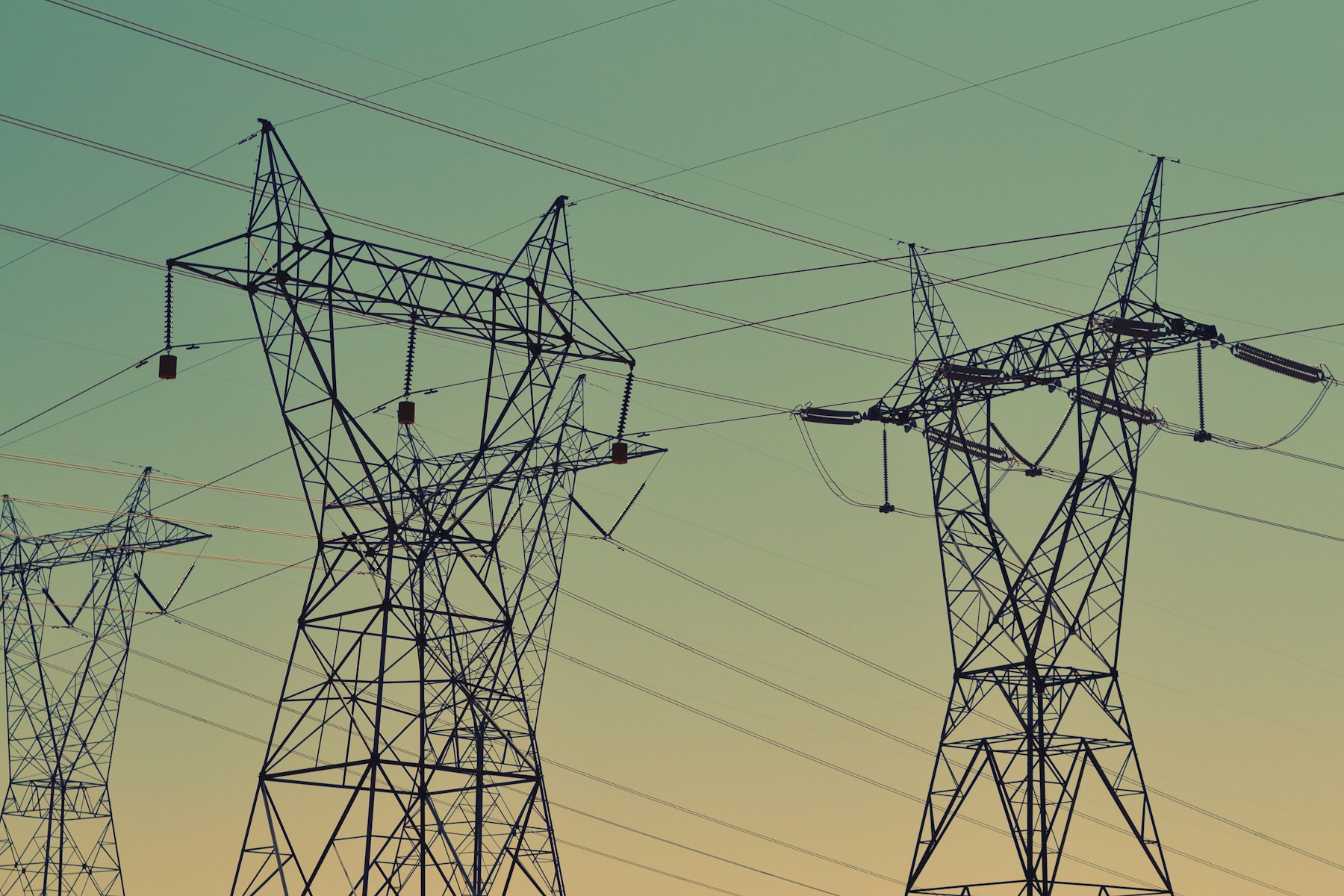
Serious electrical accidents rarely happen to electricians. They happen to the person who digs through a cable, lifts a ladder into an overhead line, or opens a door that should have been locked. The ESA electrical safety instructions exist for that situation: they govern how non-electrical work may be carried out in and beside a high-voltage installation, and who may let whom in.
Work where the question usually comes up
- Excavation and groundwork near a buried cable or a pole.
- Work with a lifting appliance, scaffold or cherry picker within reach of an overhead line.
- Construction, painting and demolition inside a transformer or switchgear building.
- Service, cleaning and maintenance in an operating room somebody else is responsible for.
- Vegetation clearance and tree felling along a line corridor.
How non-electrical work becomes permitted
- 1
The installation's owner knows what is there
The work is planned against whoever operates the installation. Where the cables run, what is live and what can be switched out are facts nobody on the worksite can guess at.
- 2
An electrical safety supervisor is appointed
The role leads the work from an electrical safety point of view: it decides which measures are required, carries them out or orders them, and lets the crew in. It is always a person, never a company.
- 3
The measures are taken before anyone goes in
Disconnection, earthing, barriers or screens — which of them depends on the installation. The point is that the work area is bounded and that the boundary is visible to somebody who cannot judge the danger themselves.
- 4
The crew is briefed
The briefing is given by the electrical safety supervisor, on site, and covers this job: what has been bounded off, what is still live, and what to do if anything changes. Whoever receives it is an instructed person.
- 5
The work ends and the area is handed back
Barriers are removed and the installation restored by whoever isolated it. Work that merely stops has not been closed out.
The employer has to be able to show the knowledge is there
The electrical safety rules place responsibility for the worker having sufficient knowledge on the employer, not on the individual. That means the question is not whether your employee feels comfortable, but whether you can show they were trained. A certificate is the simplest way to do that, and it is also what the client asks for.
Read on
Instructed person
What the role allows, what it does not, and why it does not qualify you to work on electrical equipment.
For contractors
What a grid owner or industrial client typically requires before you are let onto the site.
Certificates and validity
Where the date is, what happens when it passes, and how somebody else checks yours.
Questions about working near live equipment
- We are only painting in a switchgear room. Does it still apply?
- Yes. The place decides, not the task. A brush stroke in a switchgear room is carried out inside a high-voltage installation, and whoever does it needs to have been briefed on what applies there.
- Our client says ESA. What do they mean?
- ESA is the electrical safety instructions within EBR, the Swedish power industry's shared rules for work in and near electrical installations. A client ordering work in their own installation normally requires those coming in to be trained to them, because that is the language their own safety supervisors work in.
- Does it qualify me to do electrical work?
- No. Instructed person is the opposite: the role exists so that you can do work that is not electrical work, in a place where electricity is present. Electrical work requires other qualifications and falls outside this course.
- Is a briefing from our supervisor enough?
- The supervisor's briefing does not replace the course, and the course does not replace the briefing on site. The course gives the general knowledge of the rules and the risks; the briefing on site concerns that particular installation and is given by the electrical safety supervisor.
Sending a crew into an installation you do not own?
Describe the work and we will say which certification the client is likely to ask for.
Contact us