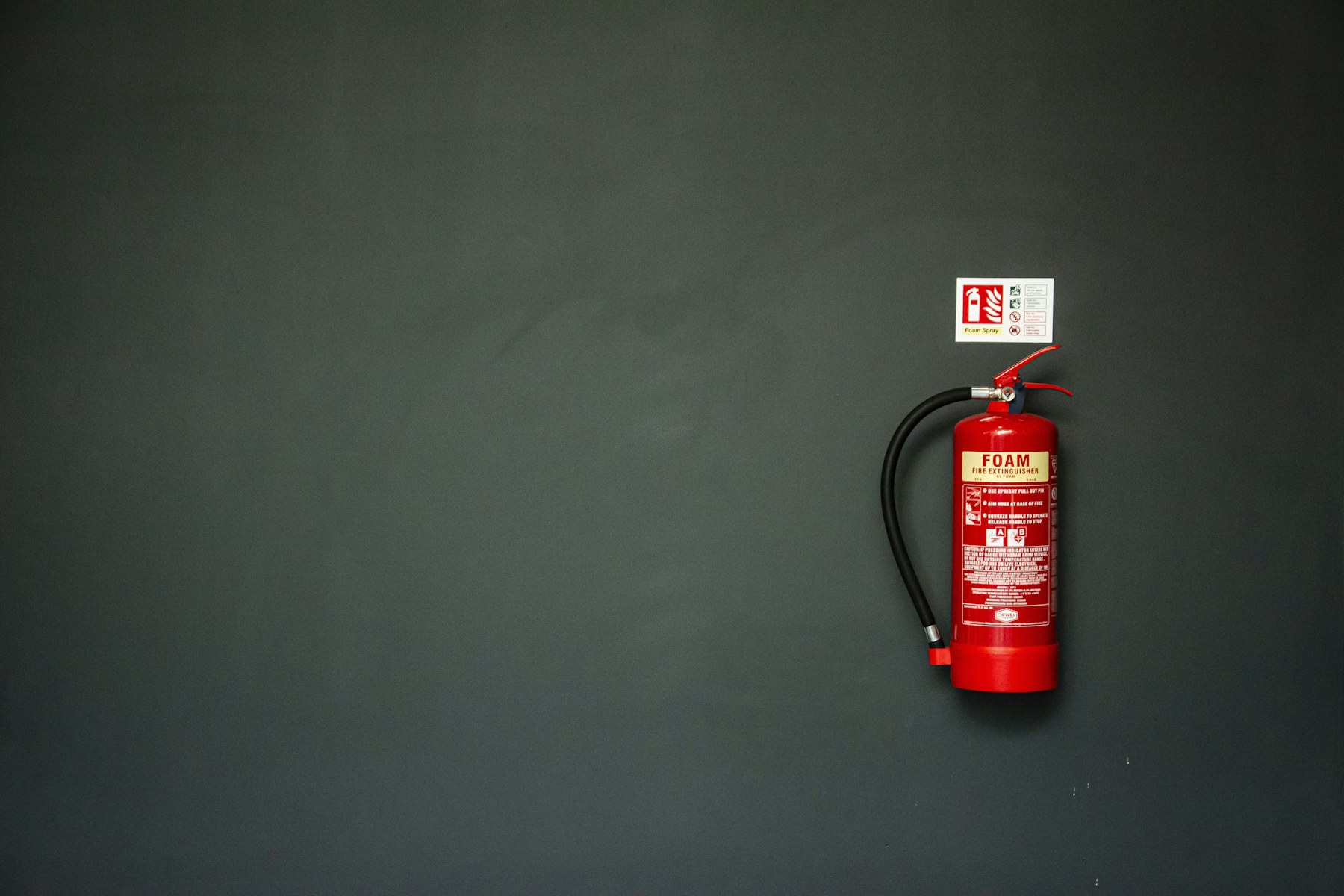
The fire watch is the role most often filled by whoever happened to be free. It is also the role that is supposed to spot the fire. Those two things sit badly together, and the safety rules resolve it by requiring the same certificate of the fire watch as of the person doing the work.
What watching consists of
- Being present throughout the work, with a view of the work itself and of the space the sparks can reach.
- Having the extinguishing equipment at hand and knowing how to use it before it is needed.
- Being able to raise the alarm: knowing the address, the way in for the fire service, and where the call point or telephone is.
- Stopping the work when conditions change — when a door opens, a fan starts, or something combustible is moved back.
- Continuing to watch after the work has ended, for the time the permit states.
The fire watch must not do the work
The role rests on somebody having their eyes on the surroundings while somebody else has their eyes on the weld. One person doing both is in practice only doing one of them, and it is not the watching. This is the most common deviation on a hot-work job and the easiest to avoid.
The fire watch's shift
- 1
Before the work
Go through the permit together with whoever is about to work. Check that the precautions written in it have actually been carried out, not merely decided on.
- 2
During the work
Keep watch, including in the other direction. Sparks travel through gaps, down through floors and into insulation, and the person welding sees none of it through the visor.
- 3
During breaks
Watching does not stop because the work pauses. Hot work that has stood still for a quarter of an hour still has hot material on site.
- 4
After the work
The after-watch is part of the job, not an extra service. It runs for the time the permit states and ends with a check of the place, with a thermal camera where one is available.
Whoever watches needs to see what can burn
Watching is hard when what ignites is out of sight. Hot work against a wall heats the other side of that wall, and the room where ignition happens may not be the room the work is done in. That part of the risk assessment — what is behind, below and above — is the fire watch's business to know too, because they are the one who has to be looking the right way.
Questions about fire watch
- Is the fire watch's course different from the operative's?
- No, it is the same certification course. It covers all three roles, because all three need to understand each other's duties for the job to work. That is why the question is usually how many of you to send, rather than which course each person should take.
- Can an apprentice stand fire watch?
- If they hold a valid certificate, yes. The role calls for certification and judgement rather than skill in the work being done — but it also calls for the nerve to stop somebody more experienced. That is worth saying out loud before the work starts.
- How long should the after-watch be?
- It is set in the permit, from the risk assessment for that particular place. Whoever wrote the permit has already answered the question, and the answer is on the form.
Need more people who can stand fire watch?
It is the role that turns out to be missing when a job has to be postponed. See when the next course runs.
See the courses